01OVERVIEW
Front Matter
SCRIPT · PROFILE
Devanagari देवनागरी
The "script of the city of gods" — from Sanskrit to Hindi, 120 languages bound under a single headline.
Devanagari is South Asia's largest script, writing ~120 languages including Sanskrit, Hindi, and Marathi. Its name means "city script of the gods" (deva=divine, nagari=urban script), reaching its current form around the 11th century. An abugida where each consonant inherently contains a vowel, it features a distinctive horizontal headline (śirorekha) atop words. Over 600 million people read and write it today.
2,300 Years to Devanagari
From Brahmi to official Hindi
BC 250
Brahmi
The edict pillars of Ashoka — common ancestor of most South Asian scripts.
400s
Gupta script
With the Gupta Sanskrit revival, Brahmi evolves into the Gupta script.
700s
Nagari emerges
Nagari, "the city script," with its defining headline stroke.
1000s~
Devanagari standardized
Becomes the standard for Sanskrit literature — the "script of the city of gods."
1950
Official script of India
The Indian constitution names Hindi in Devanagari the official language of the Union.
1991~
Digital spread
Unicode and the Hindi internet — the daily script of 600 million.
02ARTIFACT
Primary Artifact
Isha Upanishad · Shukla Yajurveda
Devanagari Sanskrit manuscript · Upanishad verses 1–3
Full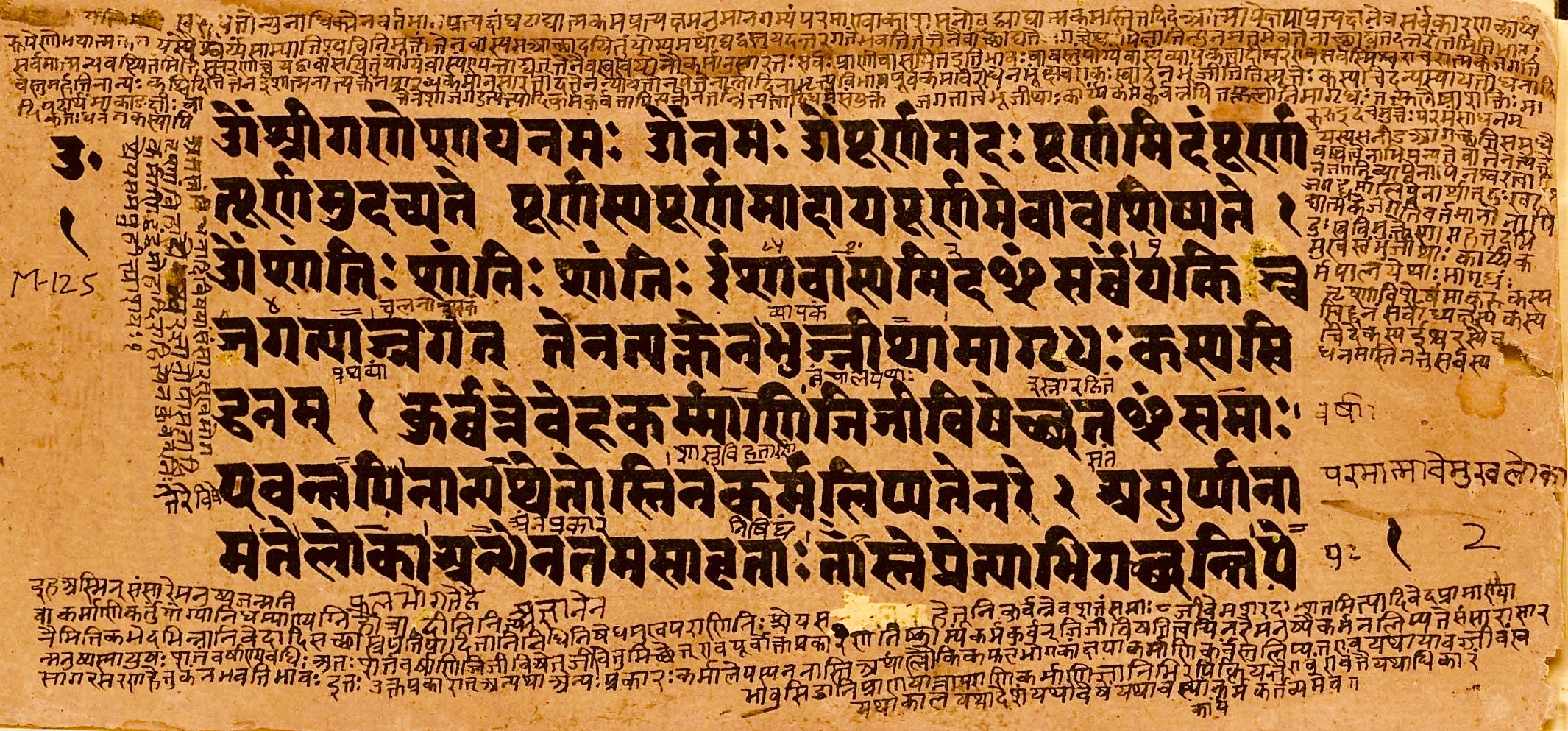
Headline
Close-up
— Shukla Yajurveda Upanishad · Sanskrit set in Devanagari
Devanagari's visual identity is the horizontal headline (śirorekhā) drawn across the top of each word, from which the letters appear to hang. It became the standard script for Vedic Sanskrit literature — the Upanishads, Bhagavad Gita, and Yoga Sutras have all been transmitted in this script.
04SPECIMEN
The Letters
Signs · Unicode · TypesSample GlyphsClick to copy
Glyph evolution
Form change over time
Loading evolution data…
06MECHANICS
Reading Mechanics
Direction · Method↔
Direction
Left to Right (LTR)
Left to right, with the headline (śirorekhā) joining each word.
α
System
Abugida
⌨
Input method
InScript keyboard layout (Indian standard); romanized input also supported (Google IME etc.).
Keyboard layout
Standard IME · input chart
Devanagari InScript Layout
Indian standard InScript. Consonant-based with combining vowel marks.
ौ
ै
ा
ी
ू
ब
ह
ग
द
ज
ो
े
्
ि
ु
प
र
क
त
च
ॉ
ॆ
ँ
ं
म
न
व
ल
स
य
space
⌫
💡 Vowel marks (matras) combine with consonants. Romanized input (Google IME) also widely used.
07LINEAGE
The Lineage
Family · DescendantsPhylogeny
Ancestors & descendants
Phylogeny
Related scripts
Ancestors · Descendants · Family
08REACH
In the World
Usage · ReachLanguages and users
Languages bound under one headline
Devanagari in numbers
Users · Languages · Years
600M+
Users
120+
Languages
1,000+
Years
Major collections
ॐ
National Museum, New Delhi
New Delhi
📖
BHU Manuscript Library
Varanasi
🏛
CSMVS Museum
Mumbai
🇬🇧
British Library (Sanskrit MSS)
London
Living legacy
22
Scheduled languages
Many of the 22 scheduled languages of India use Devanagari or its relatives
शिरोरेखा
The headline
The line atop each word — among the most recognizable script signatures on earth
ॐ
Om
The sacred syllable shared by Hindu, Buddhist, and Jain traditions — one Devanagari sign, global icon
3
Constitution
The original Indian constitution was hand-lettered, in Devanagari and English