線文字Bの解読
◈解読に貢献した人物
英国の考古学者。1900年、クレタのクノッソスでミノア文明と線文字Bの粘土板を発見。50年間「線文字Bはギリシャ語ではない」と断言し、粘土板の写しをほとんど公開せず解読を遅らせた。
ブルックリン大学の古典学教授。40万枚のインデックスカードに統計を記録し、語尾変化のパターンを発見——屈折語であることを立証した。1950年、肺がんで43歳の若さで没し、答えを見ずに世を去ったが、彼女の格子表がヴェントリスの解読の決定的な土台になった。
建築家出身のアマチュア言語学者。14歳(1936)でアーサー・エヴァンズの講演を聞き、生涯線文字Bに没頭。6言語を操った。1952年6月28日、30歳の誕生日直前に解読へ成功し、7月1日にBBCラジオで発表。1956年9月6日、34歳で交通事故により死去——ケンブリッジのチャドウィックとの共著『Documents in Mycenaean Greek』刊行の3週間前だった。
ケンブリッジの古典学者。ヴェントリスの1952年の解読をひと月かけて検証した後、共同研究を開始。1956年、共著『Documents in Mycenaean Greek』でミケーネ・ギリシャ語研究の標準著作を刊行。
◈どのように解読されたか
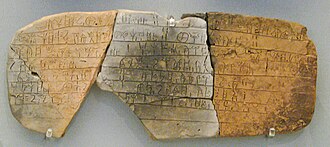
Kober filled 400,000 index cards to find patterns of word-ending variation — characteristic of an inflected language. Ventris developed a 'grid analysis': he arranged words sharing a root but with different endings in a grid, cross-inferring the phonetic values of shared signs. Using place names from Crete (Knossos, Amnisos, Tulissos) as anchors, he fixed a few values and solved the rest in a chain reaction. The decoded words — TI-RI-PO (tripod), WA-NA-KA (king/wanax), PO-ME (shepherd), DI-WE (Zeus), PO-SE-DA-O (Poseidon), A-TA-NA (Athena), E-RA (Hera) — were all archaic Greek.
◈実際に解読された文字
𐀒𐀜𐀰𐀄𐀰 = ko-no-so =「クノッソス(Knossos)」— ヴェントリスが地名から音価を確定した決定的な単語。
◈解読の前後の物語
In 1900, Arthur Evans excavated Knossos and found thousands of clay tablets. The scholarly consensus held that Linear B recorded a unique Minoan language unrelated to any Indo-European tongue. Professional linguists had made no progress for decades.
In June 1952, Ventris proposed the language was Greek. Scholars laughed — but the analysis held. Linear B recorded archaic Greek from around 1400 BC.
The decipherment pushed back Greek history by over 300 years. Tragically, Ventris died in a car accident at 34, just four years later. Linear A remains undeciphered.