01OVERVIEW
Front Matter
SCRIPT · PROFILE
Hiragana ひらがな
A script born in the hands of women courtiers — the syllabary that first wrote The Tale of Genji, the first script every Japanese child learns.
Syllabary developed in the Heian period (completed c. 905 CE) by female aristocrats from cursive Chinese characters. "Hiragana" means "ordinary kana." Murasaki Shikibu's The Tale of Genji (11th century) — one of the world's first novels — was written in hiragana. The core of Japanese triple-script system alongside katakana and kanji, it is the first script Japanese children learn.
02ARTIFACT
Primary Artifact
The Tale of Genji Emaki
12th century · Tokugawa & Gotoh Museums · oldest surviving Japanese illustrated handscroll
Full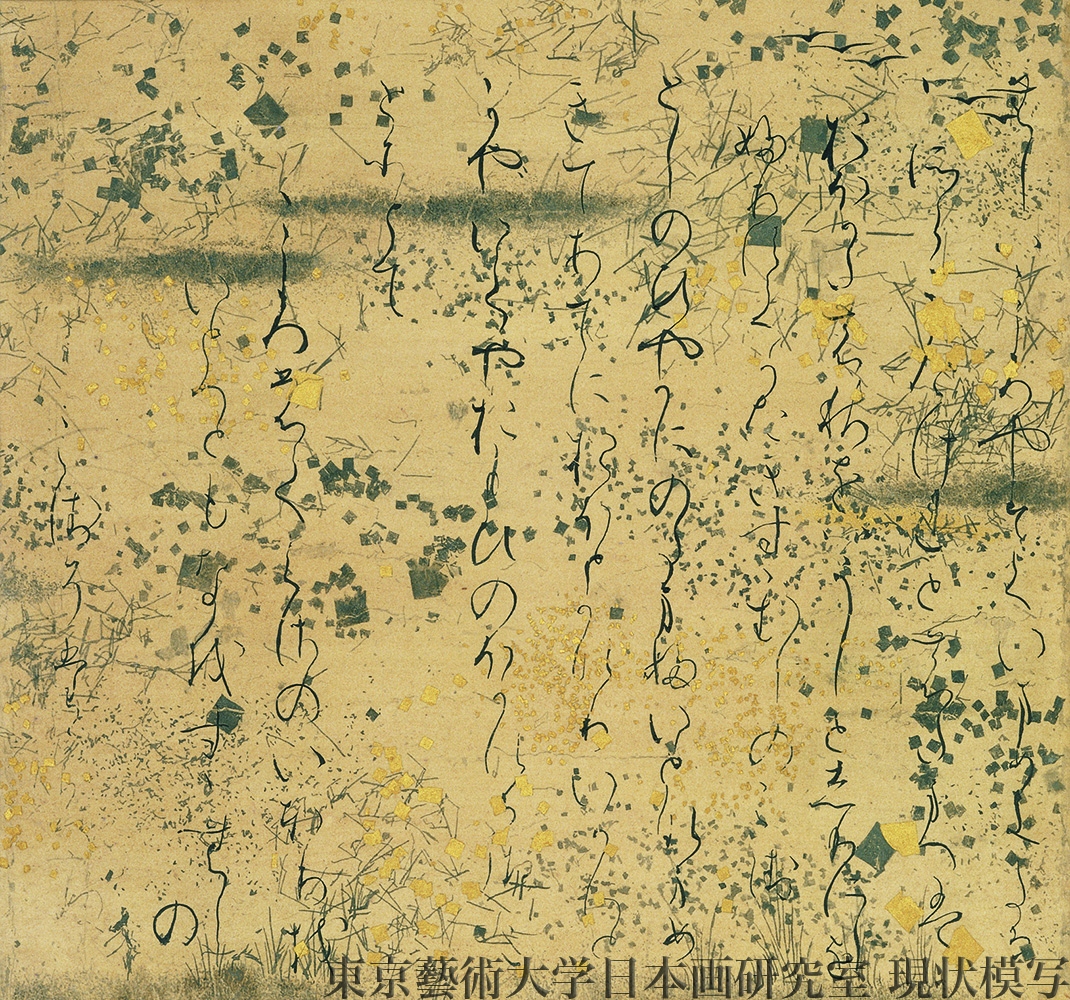
Text
Close-up
— A 12th-century illustrated transcription of Murasaki Shikibu's 11th-century original
Written in hiragana in the early 11th century, Murasaki Shikibu's Tale of Genji is widely considered one of the world's first novels of psychological depth. In an age when kanji was the formal script of men, hiragana polished by women courtiers became the backbone of classical Japanese literature.
04SPECIMEN
The Letters
Signs · Unicode · TypesSample GlyphsClick to copy
Glyph evolution
Form change over time
Loading evolution data…
06MECHANICS
Reading Mechanics
Direction · Method↔
Direction
Left to Right (LTR)
Left to right, or vertical columns; modern Japanese is mostly horizontal.
α
System
Syllabary
⌨
Input method
IME converts romaji to hiragana automatically, e.g. "ka" → か.
Keyboard layout
Standard IME · input chart
Hiragana Roman Input (Japanese IME)
Type Roman letters, auto-converts to Hiragana. ka→か, shi→し
たta
てte
いi
すsu
かka
んnn
なna
にni
らra
せse
ちchi
とto
しshi
はha
きki
くku
まma
のno
りri
れre
つtsu
さsa
そso
ひhi
こko
みmi
もmo
ねne
るru
めme
space
⌫
💡 IME: Roman input → hiragana → Space to convert to kanji. Standard modern Japanese input.
07LINEAGE
The Lineage
Family · DescendantsPhylogeny
Ancestors & descendants
Phylogeny
Related scripts
Ancestors · Descendants · Family
08REACH